Choosing shoes from a card: five checks ahead of payment
Five checks, in the sequence a shoe order runs: the catalogue that showed you the pair, the seller, the pair, the warehouse photos, and the handful of habits that prevent the most common shoe returns.
Live links and dated prices mark a careful shoe catalogue
A Spreadsheet site is only as good as its links and its dates. Open a few cards at random and check that the listing still exists and still shows the item on the card. Look for a date on prices; an undated price on a catalogue that changes daily tells you nothing. Look for who runs the site and how to reach them.
Be wary of sites that rank agents or products without saying how, that hide their tracking links, or that describe every item as the best. Also notice whether descriptions are written for the site or pasted from seller titles; pasted titles are often a sign that nobody has looked at the photos.
Apply the same tests here. Every card on this bench carries the date its price was read, every description was written from the photo, and the about page explains how the site is paid for.
Seller clues printed on shoe photos
The catalogue card leads to a marketplace listing, and the listing belongs to a seller. Some marketplaces show store ratings and sales counts to visitors from abroad; others hide most of that behind a login from outside China. Use what you can see: how long the store has existed, how many items it lists, and whether its photos look like its own.
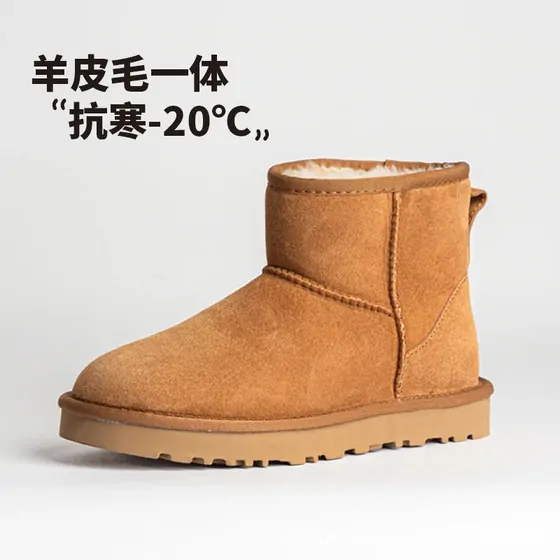
Read claims printed on photos as claims. The sheepskin boot to the right carries a line of Chinese text that translates roughly as "fur and skin in one piece, resists minus twenty degrees". That is the seller talking, not a test result, and an agent's warehouse check will not confirm it.
Sellers who print their own size charts, colour names and close-ups tend to be easier to buy from, because those photos answer questions before you need to ask them.
Picking the pair itself
This is how to choose a pair once the seller looks sound. Start with the shape, then the material, then the colour. Shape decides comfort: toe box width, heel height, how high the collar sits. Material decides how the pair ages and how honestly it photographs. Colour is the last decision, and the one the swatch sorter helps with.
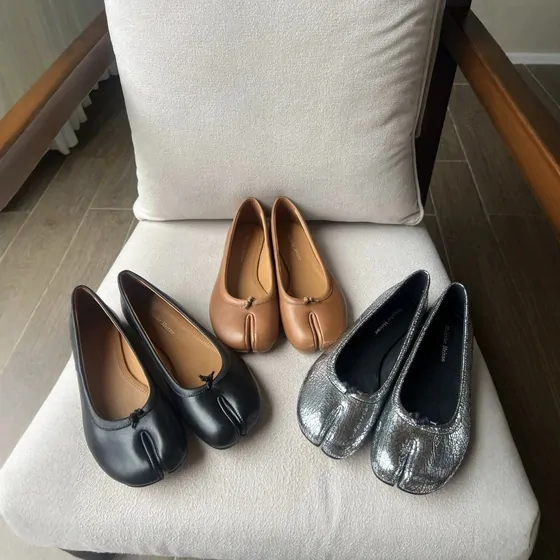
Check every gallery photo, not just the cover. Look for a top-down view, a sole view and a close-up of any stitching or hardware. For split-toe flats like the ones to the right, a top-down view is the only way to see how the toe division sits.
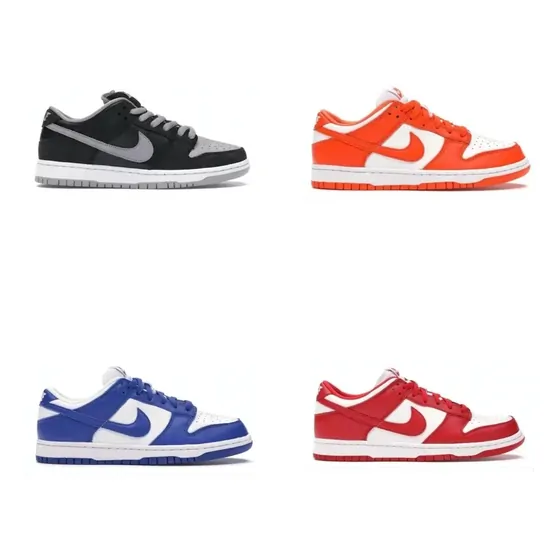
If the listing offers several options, make sure the photo you fell for belongs to the option you are choosing. In grid listings, the cover often shows a colour that is not the first or default option.
Warehouse QC shots of shoes, checked in order
When the pair reaches the agent's warehouse you will get photos, and this is your final low-cost chance to back out. Here is how to check QC photos of shoes, four things in order: that it is the right model and colour option, that the size on the label or tongue matches your order, that the two shoes match each other, and that there is no obvious damage to the toes, heels or sole edges.
Judge colour against something white in the same shot, a label for instance, not against how the listing looked in your head. Warehouse lamps are bright and flat, and suede in particular will look different. If a photo is blurred or misses something important, ask for a retake; agents commonly reshoot a photo that is unusable.
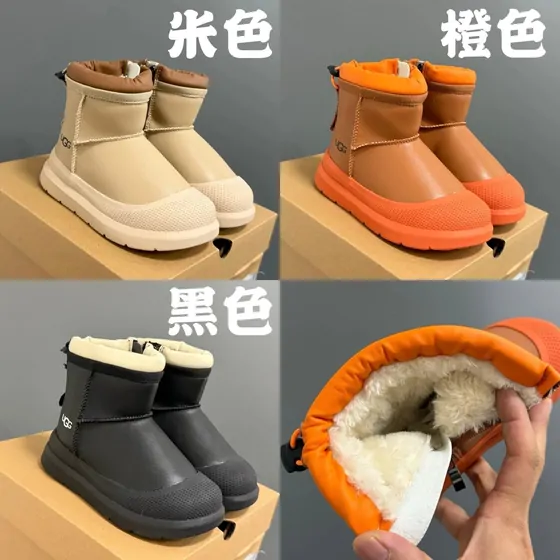
Close-up photos of inner linings matter for fleece-lined shoes, like the orange mini boot to the right. A lining that is thinner or patchier than in the listing is easier to raise before shipment than after.
Cautions that save a return trip
- Write size and colour option in the order note in the listing's own words, every time.
- Measure your foot and use the seller's chart; do not convert from a shoe you own made by a different maker.
- Expect colour to shift between listing, warehouse photo and daylight. Decide in advance how much shift you would accept.
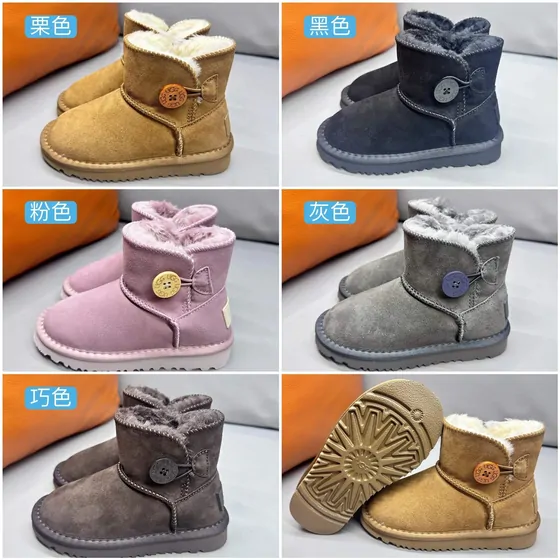
- Check whether a listing is a children's size range before ordering for an adult.
- Ask the agent about removing boxes before shipping if you do not need them; shoeboxes add size to a parcel.
- Do not ask anyone to misdescribe a parcel. Duties and any penalties are the buyer's to bear, and the declaration should say what is really inside.
Returning shoes from abroad is slow and rarely cheap, so nearly all of these cautions are about getting the order right before anything is posted.